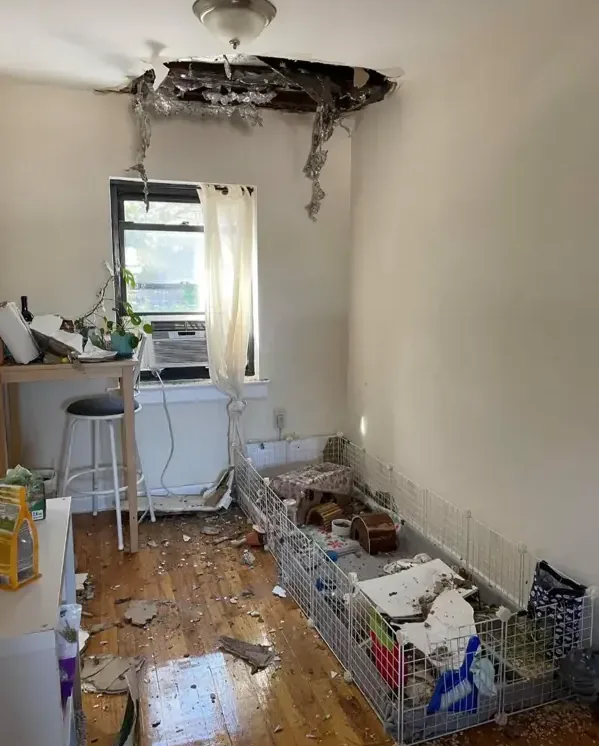
A drip from the ceiling in a condo or apartment usually starts in someone else's unit. Burnsville has both kinds of housing: condominiums in the 54 acre Heart of the City redevelopment and apartment complexes the city added in the 1990s. When the water starts upstairs, the household below has to act fast on a problem it cannot fix at the source.
Key takeaways
- A ceiling leak in a multi unit building usually starts in a bath, supply pipe or appliance in the unit above.
- Stay out from under a bulging or sagging ceiling, because it is holding water. A professional can release it safely.
- Tell the neighbor above and the building manager or association in writing, with the date and time.
- Photograph the stain, the drip and every wet surface before anything is moved.
- Wet drywall and insulation in the joist bays are opened and dried, not painted over.
Why the water starts in the unit above
In a building with units stacked on top of one another, a ceiling is also someone else's floor. Water from a bath, a toilet, a supply pipe or an appliance spreads through the floor and the joist bays and shows up below.
The water rarely stays where it starts. It runs along the top of the ceiling drywall until it finds a seam, a light fixture or a vent, and then it drips.
Burnsville has this kind of housing from more than one era. Heart of the City is a 54 acre redevelopment with condominiums, and in the 1990s the city filled in its last available land with upscale housing and apartment complexes.
The age and style of a building change the details, but not the basic path of the water.
First steps when the ceiling drips
The aim in the first stretch is to limit what the water reaches and to get the source stopped.
A ceiling that bulges or sags is holding water. Stay out from under it and let a professional release it safely.
- Move people and pets out from under the stain.
- Put a bucket and a tarp under the drip, and move furniture and electronics away.
- Switch off ceiling lights and fans in the wet area at the wall switch.
- Photograph the stain, the drip and the floor before anything is moved.
- Message the neighbor above to say that water is coming through, and note the time.
Who to tell and what to write down
A leak in a shared building involves several people, and a written trail helps all of them. Tell the neighbor above, the building manager or the association, and then the insurer.
If the neighbor is away, tell the manager right away, because someone may need to shut off the water to that unit. Nobody should enter the unit above without permission.
Nothing in the cleanup decides who pays for what. The crew documents the water, the materials and the readings so that the people who sort that out have facts to work from.
- The date, time and place the leak was first seen.
- Messages sent to the neighbor and the manager.
- Photos of the stain, the source if it is visible and each wet surface.
- The drying log, with daily readings.
How wet drywall and joist bays are handled
Opening the ceiling
A moisture meter and thermal imaging show how far the water has traveled. Drywall that is soaked or sagging is cut out, and wet insulation is removed, because painted over wet board stays wet.
The opening is usually larger than the stain, since water spreads along the joists before it shows.
Ceiling lights and fans in the wet area stay off until the cavity is checked, because wet insulation and wiring do not mix.
Drying the cavity
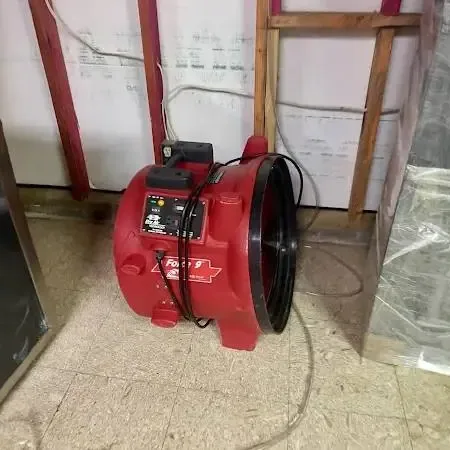
Air movers and dehumidifiers dry the joist bays and the underside of the floor above. The crew takes readings every day and moves equipment as the wet area shrinks.
Drying is complete when framing and board reach a dry reference, not when the stain disappears.
Common sources of a leak from above
The source is rarely visible from below, but the pattern of the stain hints at it.
- A stain near a bathroom wall often traces to a tub, shower or toilet supply.
- A stain below a kitchen points to a dishwasher, a sink drain or ice maker tubing.
- A stain near a laundry closet points to a washer hose or drain.
- A stain that grows in a ring suggests a slow leak.
- A sudden bulge suggests a burst supply pipe.
When the leak crosses more than one unit
In a condominium or apartment building, water often follows the walls and the plumbing chase as well as the ceiling. A single leak can wet the unit below, the one beside it and a hallway.
That is where coordination matters. The units involved are checked in order, and the building manager or association is told what the readings show.
The Burnsville page lists the other water services available here.
- The ceiling, walls and floor in the unit directly below.
- Walls shared with the leaking unit.
- Hallway carpet and door thresholds near the wet area.
Mold, records and the insurer
Mold can begin on wet drywall and insulation in 24 to 48 hours, so opening and drying should not wait for a dispute to settle.
Keep the photos, the messages and the crew's moisture log together. The insurer for the affected unit usually asks for the same set, and a clear record makes the claim shorter.
The work is described under ceiling leak water damage and appliance leak water damage, which cover the usual sources in a multi unit building. The wider ceiling leak cleanup steps for a single family house follow the same pattern with fewer neighbors involved.
Questions
Why is my ceiling wet when nothing is wrong in my unit?
In a stacked building the water almost always comes from the unit above, or from a pipe in the cavity between floors.
Should the stain be painted over?
No. Paint hides the stain and leaves wet board and insulation behind, which can grow mold. The cavity should be dried first.
Who pays for the repair?
That depends on the building rules, the lease or declaration and the cause. The cleanup crew documents the loss and does not decide who pays.
Can the water travel to other units?
Yes. It follows joists, walls and plumbing chases, so neighboring units and hallways are checked as well.
How long does a ceiling take to dry?
It depends on how much water got in and what the ceiling is made of. The daily readings decide when the cavity reaches a dry reference.
What if the leak keeps coming back?
A repeat stain means the source was not fixed or a second source exists. Tell the manager again in writing, and have the cavity checked with a moisture meter before it is closed.