Structural Drying in Farmington, MN
Surfaces feel dry long before framing, subfloor and concrete are. The drying team sizes air movers and LGR dehumidifiers to the class of loss, logs readings every day and removes equipment only when materials reach the dry reference.
(888) 432-4933Schedule the moisture readings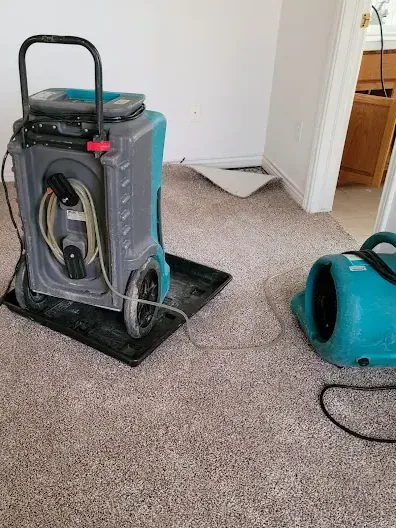
Why the drying standard matters for structural drying
Dispatch at any hour
Active water is treated as urgent around the clock, weekends and holidays included, because drywall and carpet pad keep wicking while the water sits.
Dried to IICRC S500
The drying team sizes air movers and LGR dehumidifiers to the class of loss and leaves them running until the readings, not the surface, say dry.
A claim file from day one
Timestamped photos before demolition, a moisture map and daily psychrometric logs give the adjuster a clear record of the loss.
Built for cold-climate homes
Finished basements, frozen supply lines, ice dams and sump pits drive most losses here, so the extraction crew arrives equipped for them.
First moves for structural drying
Safe steps for the household while the water is still moving and before the crew is on site.
- 1
Leave the equipment running. Turning it off resets the drying.
- 2
Keep the drying area closed. Containment keeps the dry air working.
- 3
Keep the heat steady. Large swings slow evaporation.
- 4
Note any musty smell. Tell the tech at the daily check.
What does structural drying cost in Farmington, MN?
Structural drying here typically runs $1,000 to $10,000 depending on the class of loss, the number of rooms and the days equipment runs. Concrete and hardwood take longer and cost more.
One room, Class 1 or 2
- A few air movers
- One dehumidifier
- Three days of logs
Lower level, Class 2 or 3
- Several rooms
- LGR dehumidifiers
- Daily readings
Dense materials, Class 4
- Hardwood or concrete
- Specialty drying
- A week or more
Ranges are typical, not a quote: the water category, square footage, material class and how fast drying started move the number most. The water damage cost calculator gives a closer range, and coverage depends on your own policy.
How the crew handles structural drying
Reference
A dry reading sets the goal.
Set
Equipment sized to the class of loss.
Log
Readings recorded every day.
Verify
Equipment leaves when readings match.
Structural drying is the part of water damage restoration that decides whether problems show up months later. Wood framing, subfloor and concrete hold water that a hand cannot feel, and drying stops only when readings say so.
How the drying plan is set
The class of loss, from Class 1 with little absorbed water to Class 4 with dense materials like hardwood and concrete, sets how many air movers and dehumidifiers each room needs. A dry reference reading is taken from an unaffected area of the same material so the target is clear.
- Class of loss sets the equipment count
- Dry reference taken from unaffected material
- Drying area closed to concentrate the effect
Why basements need LGR dehumidifiers
Cool basement air holds less moisture, and standard dehumidifiers stall as the air dries. Low grain refrigerant units keep pulling water out of the air at lower humidity, so concrete and framing keep giving up moisture.
Daily psychrometric logs record temperature, humidity and grains per pound so the drying can be checked.
When drying is done
Equipment leaves when wet materials read within 2 to 4 points of the dry reference. EPA indoor air quality guidance and EPA guidance on flooded homes explain why thorough drying matters.
Structural drying across Farmington and Dakota County
Crews cover ZIP 55024 end to end: Downtown and Uptown along the Vermillion River trail, the newer subdivisions north of County Road 50, the North-East neighborhoods toward Empire Township and the streets around the fairgrounds off Chippendale Avenue.
Nearby coverage reaches Lakeville, Rosemount, Apple Valley, Burnsville, Hastings, Northfield, Cottage Grove, Shakopee.
Every neighborhood and town on the coverage mapMore water damage services
Structural Drying questions
Still dealing with it?
Not sure the walls are really dry? Readings settle it, not a hand on the drywall.
(888) 432-4933 (888) 432-4933Get a moisture reading doneWhat does within 2 to 4 points of a dry reference mean?
The tech reads an unaffected piece of the same material in the house. Wet materials are dried until their readings are within 2 to 4 points of that reference.
Why can't the fans come out when the carpet feels dry?
Framing, subfloor and concrete hold moisture after surfaces feel dry. Removing equipment early leaves water trapped where it can cause swelling, odor and growth.
What is an LGR dehumidifier?
A low grain refrigerant dehumidifier keeps removing moisture from air that is already fairly dry, which matters in cool basements where standard units stall.
How long does structural drying take?
Most losses dry in three to five days. Class 4 losses with hardwood, plaster or concrete can take a week or more.
Can the drying equipment be turned off at night?
No. Turning it off lets humidity climb back and resets progress. It runs around the clock until the readings say dry.
Wet framing behind the drywall? Dry it to the readings
The drying team sets equipment to the class of loss and logs readings every day until dry.
(888) 432-4933Put drying equipment in place