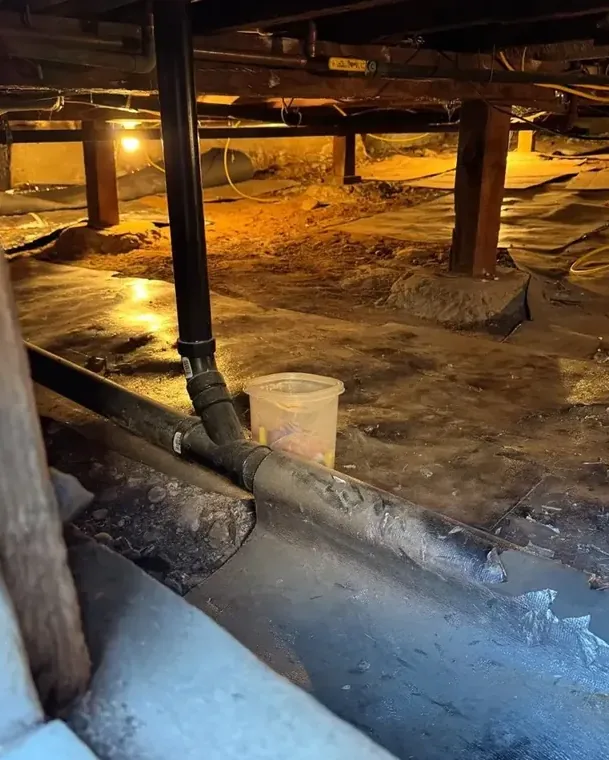
River Acres is the Cottage Grove neighborhood that backs up to the Mississippi River, and the city named it a flooding impact area when the river ran high in April 2023. A lower level that takes on river water is a different job from a rain leak, because the water arrives unclean and stays in the walls longer. This post covers the first hours, how river water is handled and how the drying is measured.
Key takeaways
- River water that reaches a lower level is treated as contaminated, so carpet, pad and wet drywall are usually removed rather than dried.
- In April 2023 the river near Grey Cloud Island ran about four feet above normal, and the city named River Acres a flooding impact area.
- Stay out of standing water until the power to that level is off at a dry panel.
- Photograph the high water mark and every damaged item before anything is moved.
- Drying is measured: readings in drywall, framing and concrete are logged daily until they reach a dry reference.
Why River Acres is named when the river rises
River Acres backs up to the Mississippi River, and Cottage Grove has more land along that river than any other Minnesota city.
In April 2023 the public works director named River Acres a flooding impact area. The river near Grey Cloud Island ran about four feet above normal that month, and the Mississippi at Hastings reached 18.9 feet, nearly a foot above major flood stage.
A label like that describes risk for a neighborhood. It does not mean one particular house took water, and it does not promise that another house stays dry.
The Cottage Grove page lists every water service the crew offers for river and rain water.
The first hours in a wet lower level
Standing water in a finished lower level is a safety problem before it is a cleanup problem, because outlets, cords and appliances sit close to the floor.
When the water is deep or the panel is wet, a qualified electrician should make the power decision before anyone goes down the stairs.
- Turn off power to that level at the main panel, but only if the panel is dry and can be reached without stepping in water.
- Keep children and pets out of the room until the water is gone.
- Do not run a furnace or water heater that has stood in water until it has been checked.
- Photograph the high water mark on the walls and each damaged item before moving anything.
- Lift boxes, rugs and furniture legs off wet carpet so stains do not spread.
Why river water is handled as contaminated
Category 3 water
River water picks up soil, debris and whatever it crosses on the way into a house, so the industry standard IICRC S500 classes it as Category 3.
Time does not clean it, and drying alone does not make it safe. That is why the plan starts with removal, not with fans.
What comes out and what stays
The rule of thumb is simple: porous goods that touched the water come out, and hard surfaces get cleaned.
- Carpet and pad that sat in the water are removed.
- Drywall and insulation that wicked water up the wall are cut out to the height the water reached.
- Concrete, sealed tile and metal framing are cleaned and treated, then dried.
- Cardboard boxes and soft goods that stood in the water are usually discarded after photos.
Extraction first, then measured drying
Extraction comes first. Truck mounted and portable units pull the standing water before it soaks deeper into framing and subfloor, and every extra hour of contact lengthens the drying that follows.
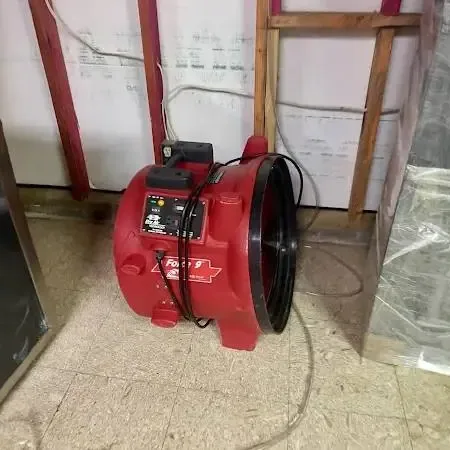
After the bulk water is out, air movers and dehumidifiers take over. The crew maps moisture with a meter and thermal imaging and takes new readings each day.
The end point is a number, not a guess. Wood, drywall and concrete are dried to within 2 to 4 points of a dry reference before anything is closed up.
The steps are laid out under basement flooding cleanup, and river water that comes in from outside is covered under storm and snowmelt flood cleanup.
When the river is high but the house is dry
High water often shows up first as closed roads and bridges. In June 2024 the city closed the Grey Cloud Trail bridge on June 26 and the Grey Cloud Island Drive causeway on June 28, with a detour through Grey Cloud Island Township.
The city told people to avoid sightseeing because of rapidly moving river water and debris. Its notice lists those closures and does not report water entering homes.
A dry house still earns a look while the river stays up. These are the places water shows itself first:
- New dampness where the wall meets the floor.
- A floor drain that bubbles or backs up.
- A sump pit, if the house has one, that fills faster than usual.
- A musty smell in the lowest room.
Getting a lower level ready before the river rises
When the river is forecast to run high, a lower level can be readied ahead of time.
None of this stops river water, but it limits the loss and shortens the cleanup that follows.
- Move boxes, papers and electronics from the floor to shelves or the upper level.
- Photograph the lower level while it is dry, so later damage can be compared.
- Test the sump pump if the house has one, and make sure the discharge outlet is clear.
- Find the main panel and the water shutoff, and keep a flashlight within reach.
- Keep floor drains and window wells clear of leaves and debris.
After the water: records and the clock
Mold can begin to grow on damp porous material in 24 to 48 hours, so removal and drying should not wait for paperwork.
River flooding is often handled under a separate flood policy rather than a standard homeowners policy, so ask the insurer which one applies. Photos, daily moisture logs and a list of what was removed support the claim either way.
A larger loss may also call for basement water removal and drying across more than one room.
- Wide photos first, then close ones of each damaged item.
- The daily moisture log from the drying crew.
- A written list of removed items with their rough ages.
Questions
Is River Acres in a flood zone?
Flood zone maps come from FEMA, and the city or county map tool is the place to check one address. What is on record is that the city named River Acres a flooding impact area in April 2023.
Can wet carpet be saved after river water?
Rarely. Category 3 water is treated as contaminated, so carpet and pad are usually removed and the floor beneath is cleaned and dried.
How long does drying take?
It depends on how deep the water got, how long it stood and what the floor and walls are made of. Concrete and framing dry slowest, and the daily readings decide when the job is done.
Did the June 2024 flooding reach homes?
The city notice lists closures of the Grey Cloud Trail bridge and the Grey Cloud Island Drive causeway. It does not report water inside homes.
What should be photographed first?
Start with wide shots of each room that show the high water mark, then close shots of damaged items, appliance labels and any moisture readings the crew takes.
How often does the bridge to Grey Cloud Island close for high water?
The public works director said the Grey Cloud Trail bridge closes for high water about every five to ten years. As of April 2023 the last time both the bridge and the island causeway had closed was 2001.