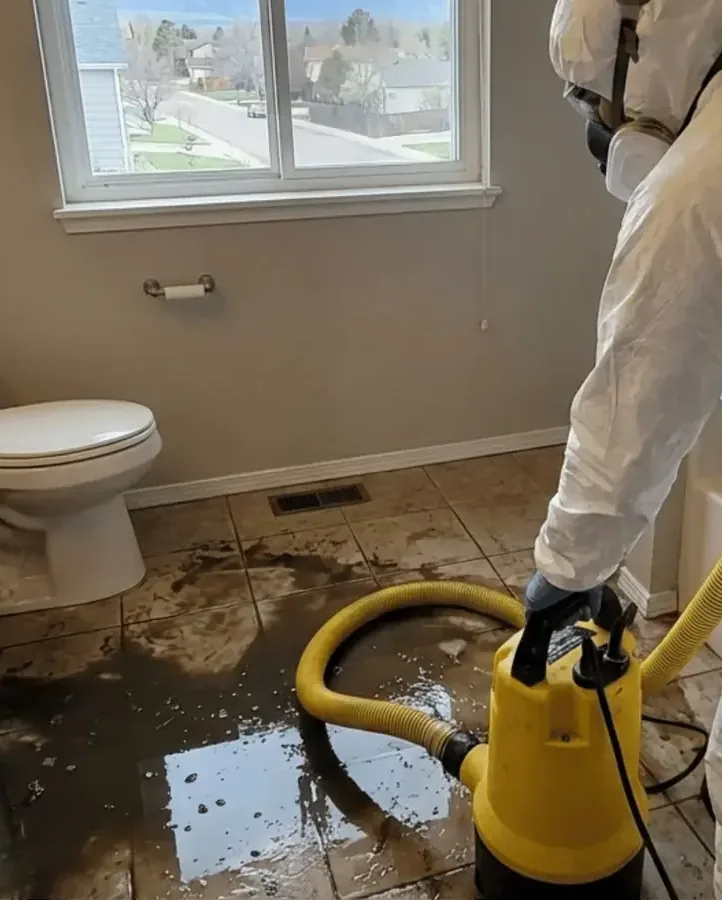
Sewage that leaves a Farmington house travels through city pipes, manholes and lift stations, then through Metropolitan Council interceptors to a treatment facility. When that path is interrupted, or a drain inside the house clogs, the water comes back up through the lowest opening it can find. This post explains the path and then the cleanup that follows a backup.
Key takeaways
- City sewage flows through Metropolitan Council interceptors and lift stations to the Empire treatment facility, which treats sewage from Lakeville, Farmington, area townships and parts of Rosemount.
- City staff maintain the local pipes, manholes and lift stations.
- A sewage backup inside a house is contaminated water: people and pets stay out, and porous materials it touched are removed.
- Do not flush, run the dishwasher or do laundry while a backup is active.
- The cleanup does not decide who pays, so photos and records matter.
Where Farmington sewage goes
Sewage from homes and businesses flows into pipes that city staff maintain, along with the manholes and lift stations on the way. From there it moves through Metropolitan Council interceptors and lift stations to the Empire treatment facility.
That facility treats sewage from Lakeville, Farmington, area townships and parts of Rosemount.
Lift stations are the pumps that move sewage uphill where gravity alone cannot carry it.
The path has several handoffs, so a backup can have more than one possible cause.
A household cannot see most of that path. What it can see is the first sign of trouble at the lowest drain, which is why the first stretch after a backup matters so much.
What a backup inside a house means
A backup shows up as water or waste rising from a floor drain, a toilet, a tub or a basement sink. It comes up through the lowest opening in the house.
The cause can sit inside the house, in the drain that serves it or further along the path. A backup at one fixture often points to a local clog, while several fixtures or several neighbors reporting trouble point to something shared.
Either way, the water that has come up is treated as contaminated.
Common early signs are worth acting on before water reaches the floor:
- A toilet that gurgles when another fixture drains.
- Water at the floor drain after the laundry runs.
- A sewer smell in the lowest room.
Clog or shared problem: clues worth noting
A few observations help the plumber, the city and the insurer. They do not name the cause, but they shorten the diagnosis.
- Does water back up at one fixture or at several?
- Does the lowest drain act up when a toilet upstairs flushes?
- Are neighbors reporting the same trouble?
- Did the problem start during heavy rain or after a long dry spell?
- Did anything go down the drain that should not have?
First steps
The steps are meant to limit the spread, not to find the cause.
Avoid chemical drain cleaners during a backup, because they can splash and do not clear a shared problem.
- Stop using water: no flushing, laundry, dishwasher or long showers.
- Keep children, pets and anyone with a weak immune system out of the area.
- Wear boots and gloves if anyone must enter.
- Turn off power in the area if outlets or cords are in the water and the panel is dry.
- Photograph the drain, the water and the damaged items.
- If neighbors see the same problem, tell the city, because city staff maintain the local pipes, manholes and lift stations.
What gets removed and what gets cleaned
Porous materials
Carpet, pad, insulation, upholstered items and drywall that wicked sewage water are removed and bagged.
Hardwood and subfloor are judged by how long the water sat and how deep it went.
Stored cardboard, paper and fabric that stood in the water are usually discarded after photos, because they cannot be disinfected.
Hard surfaces and framing
Concrete, sealed tile, metal and framing are cleaned with detergent and then treated with an antimicrobial. The area is contained so contamination does not move into clean rooms.
Surfaces that stay are scrubbed, not just wiped, since contamination hides in texture and seams.
- Floors and the base of walls are washed before drying starts.
- Cleaning tools stay inside the work area.
- Bagged material leaves through a planned route.
Extraction, treatment and drying
Extraction comes first, using equipment that pulls the water and keeps the area contained. Surfaces are then cleaned, treated and dried.
Both stages are described under sewage backup cleanup and water extraction.
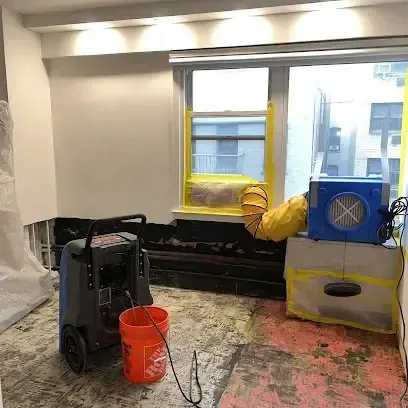
Drying uses air movers and dehumidifiers with daily readings, and it ends when framing and board reach a dry reference. The log is kept day by day under structural drying.
Containment matters throughout. Plastic barriers and controlled air flow keep dust and spray from carrying contamination into clean rooms during removal.
Air movers are placed so air does not blow contamination toward clean rooms, and the work area stays separate from living space.
Health, mold and records
Sewage water can carry bacteria and viruses, so the cleanup is done with protective gear and containment. Household members with health conditions should stay away from the area until it is cleared.
Pets and children are the most likely to touch contaminated floors, so the area stays closed off until it is cleaned and dried.
Mold can begin on wet porous material in 24 to 48 hours, which is another reason not to wait.
Nothing in the cleanup decides who owns the private sewer pipe or who pays for the repair. Ask the city and the insurer, and keep the records together.
- Photos of the drain, the water and the damaged items.
- The date and time the backup started.
- Receipts and the daily moisture log.
Questions
Who is responsible for a sewage backup?
That depends on where the problem sits, and the cleanup crew does not decide it. City staff maintain the local pipes, manholes and lift stations, so tell the city if neighbors are affected, and ask the insurer about coverage.
Is it safe to mop up sewage water?
No. It is treated as contaminated, and mopping spreads it. Protective gear, containment and removal of porous materials are part of the job.
Can carpet be saved after a sewage backup?
Almost never. Carpet and pad that soaked up sewage water hold contamination and are removed.
What is the Empire treatment facility?
It is the facility that treats sewage from Lakeville, Farmington, area townships and parts of Rosemount, after it moves through Metropolitan Council interceptors and lift stations.
How soon should cleanup start?
As soon as the area is safe to work in. Porous materials hold contamination, and mold can begin in 24 to 48 hours.
Can heavy rain cause a sewage backup?
Heavy rain can contribute where storm water gets into sewer pipes, but this post does not claim that it happens here. Noting the weather helps whoever diagnoses the problem.