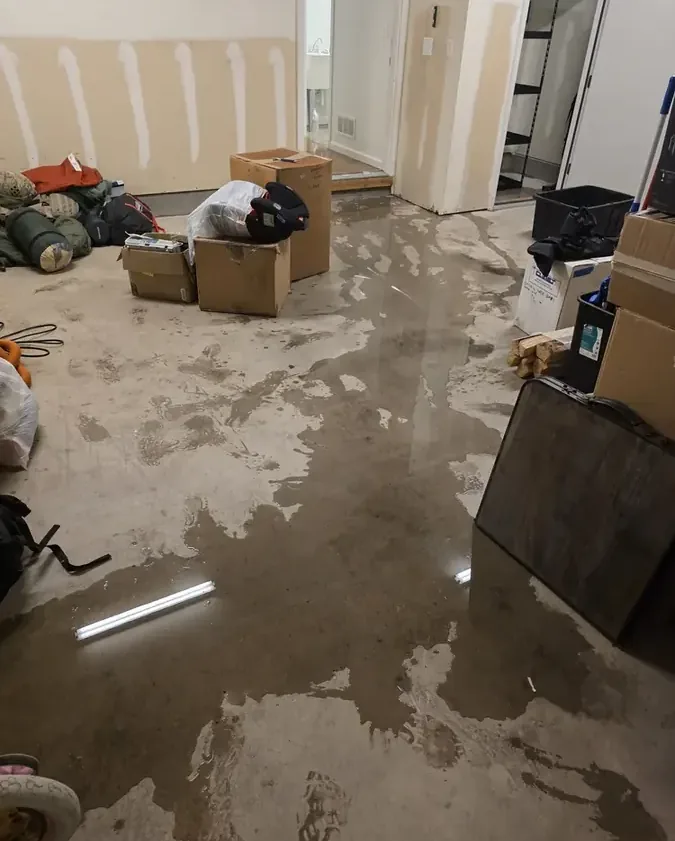
Spring melt tests a sump pump harder than any other season, and a pump that coped all winter can fall behind in a few hours. Farmington sits along the Vermillion River, a state designated trout stream, and saturated ground can hold meltwater against a foundation. This post covers why a pump fails, what to do while the pit is rising and what the cleanup involves.
Key takeaways
- Spring snowmelt is a leading cause of basement flooding in Minnesota, and a sump pump works hardest then.
- A pump usually fails for one of a few reasons: power loss, a stuck float, a frozen or blocked discharge, a worn pump or an inflow that is too large.
- While the pit rises, check the breaker, release the float and clear the discharge before anything else.
- Water that reaches the floor from outside is handled as contaminated.
- Most Farmington homes date from the 1990s and 2000s growth, so a pump that has run for many seasons deserves a test before the thaw.
Spring melt in a river city
Farmington sits along the Vermillion River, a state designated trout stream whose trout portion runs upstream around Farmington, Empire and Lakeville. The village of Dakota City grew where the railroads met that river.
In a cold climate, spring snowmelt is a leading cause of basement flooding. Saturated ground can hold meltwater against a foundation, and the water looks for the lowest place to go.
The city also grew fast. Housing units went from 4,233 in 2000 to 7,412 in 2010, and most homes date from the 1990s and 2000s growth.
Meltwater does not arrive politely. A warm spell, a rain on snow day and frozen ground can all send a large volume to a foundation at once.
How the pit, the pump and the discharge work together
A sump pit is a basin set into the floor. Water collects in it, a float lifts, and the pump pushes the water out through a discharge pipe to the yard.
Every part of that chain has to work at the same time. A failure anywhere leaves the pit to overflow onto the floor.
The chain is simple, which makes the failures easy to check and easy to miss.
Why a sump pump falls behind
This applies to a house that has a sump pit, and not every home does. A pump that stops almost always stops for a simple reason:
A pump can look fine and still fail. Running it once in the dry season catches a stuck float or a dead motor.
- Power loss: a tripped breaker, a storm outage or an unplugged cord.
- A stuck float: debris or a tilted pump keeps the switch from lifting.
- A frozen or blocked discharge: ice or a kinked hose keeps water from leaving.
- A failed check valve: water runs back into the pit after each cycle.
- A worn pump: motors give out after many seasons of work.
- Too much inflow: the pump runs but cannot keep up with a heavy melt.
What to do while the pit is rising
Work through the checks in order, and keep away from the water if cords or outlets are wet.
If the pit overflows anyway, the aim shifts from saving the pump to protecting the house.
Check the pump
- Look at the breaker and the outlet first.
- Lift the float by hand and see whether the pump starts.
- Clear leaves, ice or a kink from the discharge outside.
Slow the water
- Pause laundry, dishwashers and long showers.
- Move boxes and electronics off the floor.
- Bail from the pit with a bucket if it is safe to reach.
When water is already on the floor
Water that has spread across the floor is no longer a pump problem. It is a cleanup problem, and the clock is running.
The longer water sits against drywall and carpet, the higher it climbs. Wicking can carry moisture above the visible wet mark.
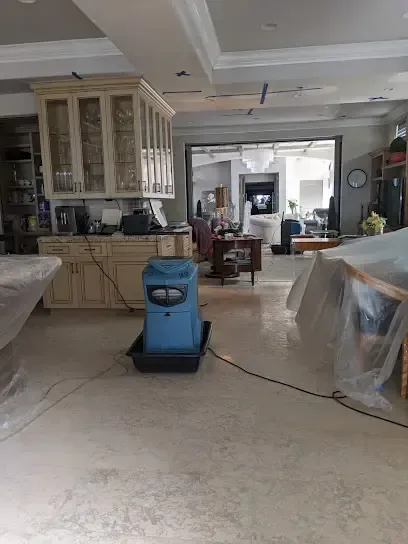
Extraction pulls the standing water first. Even melt water has crossed soil and yards on the way in, so it is handled as contaminated and porous materials it soaked are removed.
Drying follows with air movers and dehumidifiers, and moisture readings are logged daily. The stages are described under sump pump failure cleanup and basement flooding cleanup.
- Photograph the pit, the pump and the water on the floor.
- Lift furniture and boxes off wet carpet.
- Keep power off in any room where cords sit in water.
- Call for extraction before the drywall wicks the water up the wall.
Before the thaw: checks that pay off
Most of these checks take little time and are best done before the ground thaws.
A pump test also shows where the discharge goes. Water that leaves the pipe and runs back toward the house means the outlet needs moving.
- Pour a bucket of water into the pit and watch the pump start and finish.
- Clear the discharge outlet and make sure it drains away from the foundation.
- Check that the cord is plugged into a working outlet.
- Consider a battery backup so a power loss does not stop the pump.
- Note the pump's age and plan to replace it before it fails.
- Keep gutters and downspouts discharging away from the house.
Records and the mold window
Mold can start on damp porous material in 24 to 48 hours, so extraction and drying should not wait on the claim.
Insurers often treat a failed sump pump, seepage and sewer backup differently, so ask what applies. Photos of the pit, the pump and the wet areas, plus the daily moisture log, support the claim.
Water that comes from outside rather than from a failed pump falls under storm and snowmelt flood cleanup.
- Photos of the pit, the pump and the wet areas.
- Notes on the weather and the time the pump stopped.
- The daily moisture log from the drying crew.
Questions
Do all Farmington homes have a sump pump?
No. A sump pump matters only for a house that has a pit, and this post makes no claim about how many homes have one.
How long does a sump pump last?
Pumps wear with use and age, and one that has worked through many seasons is the most likely to fail in a heavy melt. Testing it before the thaw is cheap insurance.
Is melt water clean?
Not by the time it reaches a lower level. It crosses yards and soil, so it is handled as contaminated.
What if the power goes out during a melt?
A pump without power does nothing. A battery backup can keep it running, and the household should know where to shut off power if water rises.
Does a failed pump count as flooding for insurance?
Policies differ. Ask the insurer whether a pump failure, seepage or a backup is covered.
Is a battery backup worth it?
A battery backup keeps the pump running during a power outage, which is common in storms. It does not replace testing the main pump, but it covers one common cause of failure.