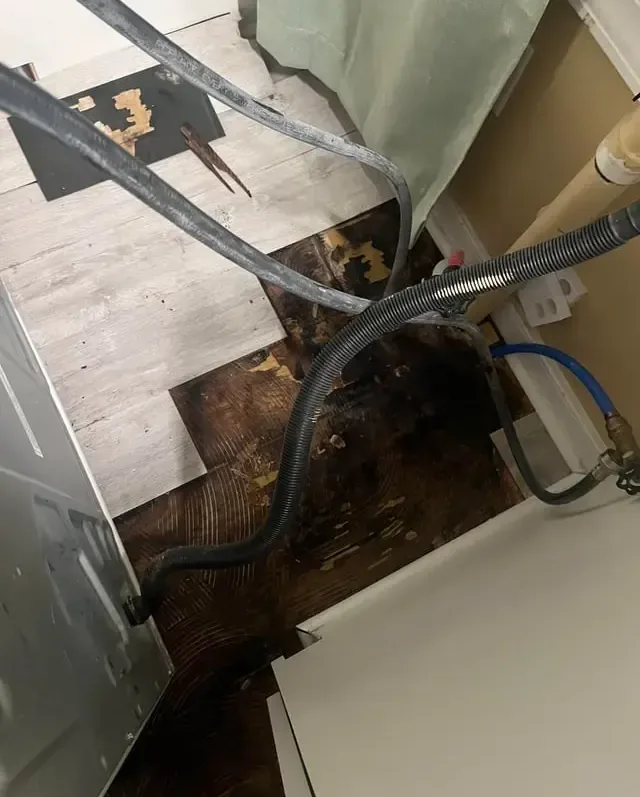
A washer, dishwasher or refrigerator leak in a rented Northfield unit can involve both a tenant and a landlord. Carleton College and St. Olaf College together enroll more than 5,000 students, and the city enforces Rental Housing Ordinances along with its Property Maintenance Code. This post covers stopping the water, writing it down and how floors, cabinets and the unit below are dried. The same steps apply whether the leak starts in a laundry closet, a kitchen or a utility room.
Key takeaways
- Shut off the appliance supply valve first, then the unit's main valve if the leak continues.
- Tell the landlord or manager in writing right away, with the date, time and photos.
- Water from a washer or dishwasher leak spreads under cabinets and flooring and into the unit below.
- Drying records help both the tenant and the landlord when coverage and repairs are sorted out.
- The city enforces Rental Housing Ordinances and a Property Maintenance Code, and its permit office inspects plumbing work.
A leak in a rented unit has two sides
A tenant sees the water first and a landlord owns the building, so a leak raises two sets of questions at once. The tenant wants the water stopped and belongings protected, and the landlord wants the structure dried and repaired.
Carleton College and St. Olaf College together enroll more than 5,000 students, and the city enforces Rental Housing Ordinances. That context is why a leak in a rented unit can involve both a tenant and a landlord.
Neither side needs to prove fault before the water is stopped and the drying starts.
Time matters to both. Water that sits under a washer or in a cabinet base soaks flooring and subfloor, and the repair bill grows with every day it is ignored.
A written notice protects the tenant by showing when the landlord learned of the leak, and it protects the landlord by showing when the tenant acted.
Where these leaks come from
Appliance leaks fall into a few patterns, and slow ones can run for days before a stain appears.
- A washer hose that cracks, or a loose connection at the valve.
- A washer drain that overflows or backs up.
- A dishwasher door seal, hose or drain connection that weeps.
- Refrigerator ice maker tubing that splits behind the unit.
Stop the water and write it down
The first stretch decides how far the water travels.
If water has reached an outlet or a power strip, stay clear and turn off the breaker for that area if the panel is dry.
- Close the supply valve behind the washer or under the dishwasher.
- If the water keeps coming, close the unit's main shutoff.
- Unplug the appliance only if the cord and the floor are dry.
- Move rugs, boxes and electronics off the wet floor.
- Photograph the appliance, the hose or connection and every wet surface.
- Message the landlord or manager with the time and the photos.
What each side does
The tenant
Stop the water, protect belongings and give written notice. Keep receipts for emergency costs and a list of damaged personal items.
Renter's insurance, if the household has it, often covers personal belongings, so the insurer is worth a message.
Rugs, books and papers dry better when they are spread out in a dry room soon after the water stops.
- Stop the water at the valve.
- Write to the landlord with the date, time and photos.
- List damaged belongings with rough ages and costs.
The landlord or manager
Confirm the leak and arrange extraction and drying quickly, since the structure belongs to the building. Notify the units below and beside the leak, and the building's insurer if needed.
- Confirm the leak in writing.
- Arrange extraction and drying quickly.
- Tell the units below and beside the leak.
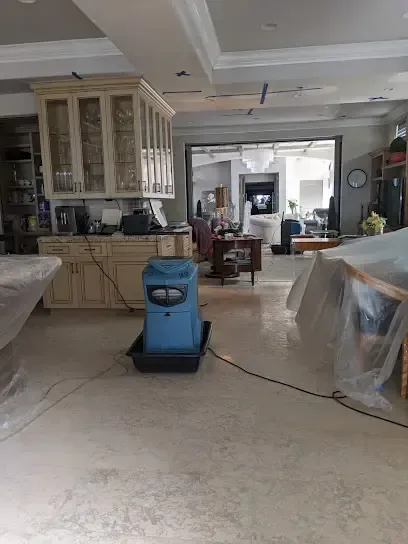
How the drying handles a rental unit
Extraction removes the standing water from flooring and the cabinet base. Moisture readings then show whether water reached the subfloor, the base of the wall or the ceiling of the unit below.
Kitchen toe kicks, laundry closets and under sink cabinets are opened or pulled where needed so air can reach the wet cavity. Air movers and dehumidifiers run, and readings are taken daily.
Hidden spots get the most attention, because a leak behind a washer or under a dishwasher often wets the subfloor before anything shows on the surface.
In a stacked building the unit below may show a ceiling stain days later. A check with a moisture meter catches it early.
- Cabinet bases, toe kicks and flooring edges.
- The wall base behind the appliance.
- The ceiling and walls of the unit below.
- Any shared wall.
Records that help both sides
A tidy record turns a disagreement into a list of facts.
A landlord with a list of dates can show what was done and when. A tenant with the same list can show that notice was given.
- Dated photos before and after the work.
- Messages between the tenant and the landlord.
- Daily moisture readings from the drying crew.
- Receipts and an itemized list of damaged belongings.
City codes in the background
The city enforces its Property Maintenance Code and its Rental Housing Ordinances. Its building permit department also issues permits and inspects plumbing work.
A repair that replaces plumbing or opens walls may need a permit, so ask the city before work starts. The city has adopted the 2020 Minnesota Building Code.
Mold can begin on damp material in 24 to 48 hours, so the drying should not wait on a dispute. The work is described under appliance leak water damage and water extraction.
The Northfield page lists the other services, and the wider appliance leak cleanup steps apply to any home.
Questions
Who pays when a washer leaks in a rental?
That depends on the lease, the cause and the insurance involved. The drying crew documents the loss and does not decide who pays.
Does the leak need to be reported in writing?
A written message with the date and time helps both sides later, even if the landlord was also told by phone.
Can the unit below be affected?
Yes. Water from a washer or dishwasher can spread under flooring and through the ceiling of the unit below, so that unit is checked as well.
Does renter's insurance cover water damage?
Policies differ. Many cover personal belongings but not the building, so ask the insurer what applies to a given leak.
Does the repair need a permit?
Replacing plumbing or opening walls may need one. The city permit office handles building, mechanical and plumbing permits and inspections, so check with it before repair work starts.
What if the leak was slow and hidden?
A slow leak can soak the subfloor for days before anything shows. A moisture meter finds the wet areas, and the readings show whether the unit below needs a check as well.