Structural Drying in Burnsville, MN
Once the standing water is gone, moisture stays in studs, subfloor and concrete where it cannot be seen. Dehumidifiers and air movers pull it out while meters on each material show when the structure is dry.
(888) 432-4933Start the drying plan in Burnsville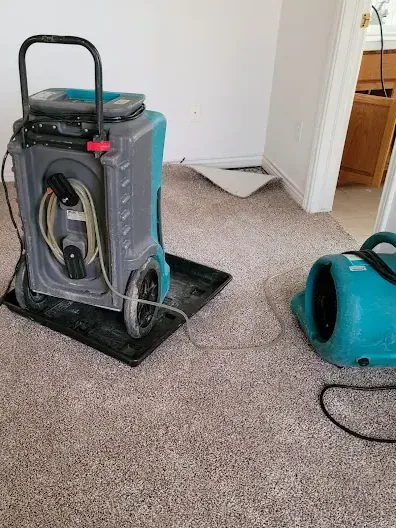
Why the drying standard matters for structural drying
Dispatch at any hour
Active water is treated as urgent around the clock, weekends and holidays included, because drywall and carpet pad keep wicking while the water sits.
Dried to IICRC S500
The drying team sizes air movers and LGR dehumidifiers to the class of loss and leaves them running until the readings, not the surface, say dry.
A claim file from day one
Timestamped photos before demolition, a moisture map and daily psychrometric logs give the adjuster a clear record of the loss.
Built for cold-climate homes
Finished basements, frozen supply lines, ice dams and sump pits drive most losses here, so the extraction crew arrives equipped for them.
First moves for structural drying
Safe steps for the household while the water is still moving and before the crew is on site.
- 1
Remove standing water. Drying works only after pooled water is gone.
- 2
Keep windows closed. Open windows let humid air undo the drying.
- 3
Leave equipment running. Fans and dehumidifiers stay on until a technician says stop.
- 4
Track the readings. Ask for the daily moisture numbers.
What does structural drying cost in Burnsville, MN?
Structural drying usually costs $1,000 to $2,500 for one small room. A lower level runs $2,500 to $6,000, and dense materials reach $6,000 to $10,000.
One room, Class 1 or 2
- Fans and one dehumidifier
- Daily meter readings
- Short run
Lower level, Class 2 or 3
- Several air movers
- LGR dehumidifiers
- Logged dry reference
Dense materials, Class 4
- Concrete and hardwood
- Drying mats and ports
- Extended equipment time
Ranges are typical, not a quote: the water category, square footage, material class and how fast drying started move the number most. The water damage cost calculator gives a closer range, and coverage depends on your own policy.
How the crew handles structural drying
Measure
Meters map wet areas and set a reference.
Place
Air movers and dehumidifiers are staged.
Monitor
Readings are logged each visit.
Release
Equipment leaves when every material matches.
Water that looks gone is often still inside the structure. Studs, subfloor, concrete and the back of the wallboard hold moisture for days, and only a meter can say when they have let go.
How drying works
Drying is controlled evaporation. Air movers sweep water off wet surfaces, and a refrigerant dehumidifier condenses it out of the air so the room can keep absorbing more. Without that balance, moisture simply moves from one material to the next.
- Air movers aimed along walls and floors
- Low grain dehumidifiers in a sealed zone
- Drying mats and ports for wall cavities
Why windows stay closed
Burnsville's river valley and lake setting means outdoor air can carry plenty of moisture of its own, so open windows can undo the work. Equipment does the drying inside a closed space.
Readings are taken at the same spots each visit, so the numbers show progress. Equipment comes out only when each material reaches the reference value taken from a dry part of the house.
Where drying fits
Drying follows water extraction on nearly every job, and a flooded lower level is detailed under basement flooding cleanup.
Structural drying across Burnsville and nearby towns
Drying crews cover ZIP 55337 and 55306, from the condominiums at Heart of the City to the houses around Crystal Lake, the Black Dog area and the streets off County Road 42 and Highway 13.
The same service nearby: structural drying in Farmington, Richfield, Shakopee.
Every water damage service for this townStructural Drying questions
Still dealing with it?
Water gone but the room still feels damp? Meters will show what is left inside.
(888) 432-4933 (888) 432-4933Plan the structural dryingHow do I know when a house is actually dry?
Meters compare each wet material with a dry reference from the same house. The job is finished when readings match, not when the surface feels dry.
Why do dehumidifiers run along with the fans?
Fans move moisture off materials and into the air, and the dehumidifier removes it. Fans alone would only spread the humidity around the room.
What do Class 1 to 4 mean?
They rate how hard a loss is to dry. Class 1 is small and low-absorbing, and Class 4 involves dense materials such as concrete and hardwood.
Why does concrete take so long?
Concrete is dense and releases water slowly, so it can read damp for days after the surface looks dry. Low grain units keep pulling moisture when standard models stall.
Can the equipment be turned down at night?
It should stay on. Drying works continuously, and stopping the equipment lets moisture settle back into the materials.
Will insurance pay for drying equipment?
Equipment time is often part of a covered loss, but terms vary. Keep the daily logs.
Need the house actually dry? Let the readings decide
Equipment is placed, moisture is logged and the structure is dried until every material matches.
(888) 432-4933Book the measured dry-out