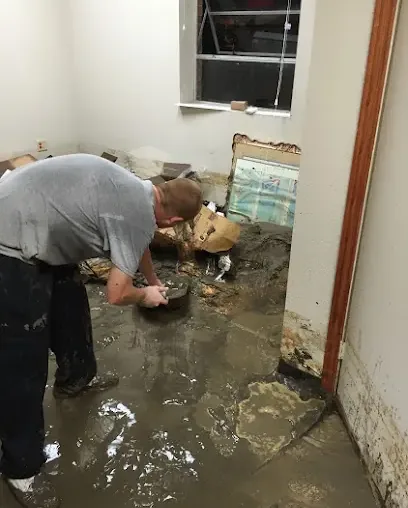
Shakopee sits on the south bank bend of the Minnesota River, and a swollen river is part of the local picture. Water in a lower level may come from river rise, heavy rain or a failed system, and storm water in particular is not clean. This post covers how that water reaches a house, why it is treated as contaminated and what the first steps are.
Key takeaways
- In June 2024 the swollen Minnesota River closed Highway 41 between First Street and Dem Con Drive, the link between Chaska and Shakopee.
- The record describes the river and its roads. It does not say that any house or street flooded.
- The local utility says storm water is not treated and can carry fertilizers, pesticides, automotive fluids and debris.
- Water that comes from outside is handled as contaminated, so porous materials it touched are usually removed.
- Extraction comes first, drying is measured and the records matter for the claim.
A city on the river bend
Shakopee sits on the south bank bend of the Minnesota River. County Highway 101 is a major connector route of historic downtown, and Highway 41 links downtown Chaska to Shakopee.
In June 2024 a swollen Minnesota River led to the closing of Highway 41 between First Street and Dem Con Drive. In March 2011 a National Weather Service spring flood outlook gave a 40 percent chance of the river reaching its record flood level at the city and listed water beginning to encroach on Highway 101.
Those records describe the river and its roads. They do not say that any house or street flooded.
How river rise and heavy rain reach a lower level
Water has several ways into a house when the ground is saturated and the river is high:
Most of these routes stay hidden until water is already on the floor. A rising river keeps the ground soaked for days, so water can keep arriving after the rain stops.
- Seepage through the wall and floor joint of a foundation.
- Backup through a floor drain when storm drains are full.
- Entry at window wells and lower doors when the surface water rises.
- A sump pit, if the house has one, that cannot keep up with the inflow.
Why storm water is treated as unclean
The utility notes that storm water is not treated. It can carry fertilizers, pesticides, automotive fluids and debris from yards and storm drains straight into rivers, ponds or lakes.
The same water that carries that mix can end up inside a house, and the industry standard IICRC S500 classes outside water like that as Category 3.
That is why the plan leans on removal and cleaning rather than on drying alone.
A household cannot see what a gallon of that water carries, and the safe assumption is that it carries plenty.
First steps in the lower level
The first stretch matters, because water that wicks into framing and drywall is slower to dry.
- Keep people and pets out of the water, and turn off power at a dry panel or have a qualified electrician do it.
- Do not walk through standing water that touches outlets or cords.
- Photograph the high water mark and the damaged items.
- Lift boxes, rugs and small furniture off wet floors.
- Call for extraction rather than trying to mop out deep water.
- Wear boots and gloves if anyone must enter the water.
- Do not use a household vacuum on standing water.
A high river means a longer wait
River water can sit against a foundation for days before it falls. Drying cannot finish while more water is still coming in.
When the ground outside is still saturated, emptying a deep lower level all at once can put stress on the walls, so the water is often lowered in stages.
- Pumping is staged, with the outside level watched between steps.
- Power stays off in any room where cords or outlets sit in water.
- Drains, window wells and the sump pit, if there is one, are checked again after each rise.
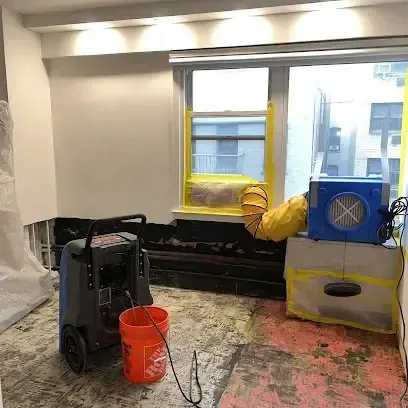
- Drying equipment is set up as soon as the water is low enough to work.
Extraction, removal and drying
Pulling the water
Truck mounted and portable units remove standing water first. The water extraction step clears the bulk before the crew checks what the water touched.
Taking out what cannot be cleaned
Carpet, pad, insulation and wet drywall that touched outside water are removed. Hard surfaces such as concrete and sealed tile are cleaned and treated.
- Carpet and pad, which hold contaminated water like a sponge.
- Drywall and insulation that are wet above the floor.
- Particleboard cabinet bases and cardboard storage.
- Anything porous that cannot be washed and disinfected.
Measured drying
Air movers and dehumidifiers run while the crew logs moisture each day. The job ends when wood, drywall and concrete reach a dry reference, not before.
Concrete floors and framing dry slowest, so the log shows progress day by day instead of promising a finish date.
Records, the mold window and coverage
Mold can begin on damp porous material in 24 to 48 hours, so the work should not wait on the claim.
River flooding is often handled under a separate flood policy, so ask the insurer what applies. Photos, readings and a list of removed items support the claim in either case.
The storm and snowmelt flood cleanup service covers outside water, and the main water extraction page explains the equipment. The Shakopee page lists the rest.
- The time the water appeared and where it entered.
- The weather and any river warnings that day.
- Photos of the high water mark and of each damaged item.
- The daily moisture log from the drying crew.
Questions
Did Shakopee homes flood in June 2024?
The record shows the Highway 41 closure caused by the swollen Minnesota River. It does not report homes or other roads flooding.
What did the 2011 outlook say?
A March 2011 National Weather Service spring flood outlook gave a 40 percent chance of the river reaching its record flood level at the city and listed water beginning to encroach on Highway 101.
Is storm water the same as river water?
Both come from outside and are handled as contaminated. The utility notes that storm water is not treated and can carry fertilizers, pesticides, automotive fluids and debris.
Can wet carpet be saved?
Rarely, if outside water soaked it. Carpet and pad that touched contaminated water are usually removed and the floor below is cleaned and dried.
What should be written down?
The time the water appeared, where it entered, the weather, and photos of the high water mark and damaged items. The crew adds daily moisture readings.
Does a high river mean a sump pump will fail?
No, but a long wet spell makes a sump pit work harder. If the house has one, test it, clear the discharge outlet and plan for a power loss during storms.