Commercial Water Damage in Northfield, MN
A wet shop, office or care facility loses time with every hour the water sits. Crews extract it, set drying around operating spaces and keep each unit's readings separate so a business can reopen as soon as the numbers allow.
(888) 432-4933Get the commercial dry-out started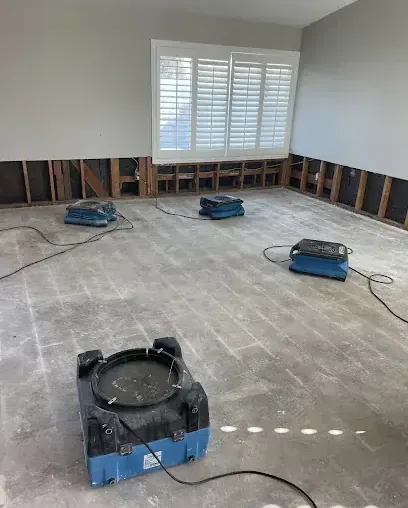
Why the drying standard matters for commercial water damage
Dispatch at any hour
Active water is treated as urgent around the clock, weekends and holidays included, because drywall and carpet pad keep wicking while the water sits.
Dried to IICRC S500
The drying team sizes air movers and LGR dehumidifiers to the class of loss and leaves them running until the readings, not the surface, say dry.
A claim file from day one
Timestamped photos before demolition, a moisture map and daily psychrometric logs give the adjuster a clear record of the loss.
Built for cold-climate homes
Finished basements, frozen supply lines, ice dams and sump pits drive most losses here, so the extraction crew arrives equipped for them.
First moves for commercial water damage
Safe steps for the household while the water is still moving and before the crew is on site.
- 1
Secure the area. Block off wet floors and keep people clear of slick or live spots.
- 2
Stop the source. Close the valve feeding the leak.
- 3
Protect inventory. Lift stock and records above the wet floor.
- 4
Alert owners. Tell the owner, tenant and insurer about the loss.
What does commercial water damage cost in Northfield, MN?
Commercial water damage runs $3,000 to $40,000. One unit costs the least, several units land in the middle, and a building-wide loss costs the most to dry.
One unit or suite
- Single space dried
- Barriers up
- Unit readings
Several suites
- Several spaces wet
- Phased equipment
- Shared-wall checks
Building-wide
- Whole-building plan
- Large equipment spread
- Full records
Ranges are typical, not a quote: the water category, square footage, material class and how fast drying started move the number most. The water damage cost calculator gives a closer range, and coverage depends on your own policy.
How the crew handles commercial water damage
Isolate
Barriers separate wet and dry zones.
Extract
Water and soaked carpet come out.
Dry
Equipment runs unit by unit.
Report
Readings are shared with owners.
Commercial water losses carry a second cost beyond the repairs: every hour of closed doors, blocked corridors or damp stock. Drying plans for business space are built to limit that disruption.
Commercial space around town
Commercial space in town ranges from Bridge Square shops and the Mercado Local marketplace to Northfield Hospital, two college campuses, public schools and senior living complexes such as Village on the Cannon and Millstream Commons. Each type needs a different plan for access, contents and shared walls.
- Retail floors and stockrooms
- Office carpet, drywall and ceilings
- Corridors, kitchens and shared walls
How a commercial dry-out runs
The crew isolates the wet area with barriers, extracts water and removes saturated carpet and ceiling tile first. Drying equipment is placed to protect neighboring units, and readings are logged for each space separately so an owner, tenant or manager can see progress.
Records for owners and insurers
Commercial claims need clear records, so photos, equipment counts and daily moisture readings are kept for each unit. For a large loss with sewage, see sewage backup cleanup, and for the drying phase see structural drying.
Commercial water damage across Northfield and nearby towns
Commercial work covers ZIP 55057, from Bridge Square shops and downtown marketplace space to the college campuses on the north and west edges, hospital-area buildings, public schools, senior living complexes and the north edge.
The same service nearby: commercial water damage in Farmington, Burnsville, Shakopee.
Every water damage service for this townCommercial Water Damage questions
Still dealing with it?
Water in the shop or office? Phased drying keeps the rest of the space working.
(888) 432-4933 (888) 432-4933Ask about the business lossCan a business stay open during drying?
Often yes. Plans use barriers and phased equipment so dry areas keep operating while the wet zone is treated.
How are shared walls and units handled?
Neighboring units are scanned with meters, and drying equipment is placed to protect them, with readings logged separately for each space.
Who deals with the landlord and the tenant?
Both need the same records. Photos and daily readings are organized by unit so everyone sees what was wet and when it dried.
What happens to wet stock and records?
Items are moved to a dry area and sorted. Paper and electronics are protected first, since delays make losses worse.
Does the plan change for a care facility?
Yes. Contaminated water and resident safety call for tighter containment, and drying is timed around daily operations.
Reopen sooner with a dry-out built around operations
Crews isolate the wet area, extract the water and log readings for each unit.
(888) 432-4933Request a commercial crew